
Last Updated on: Sep 27, 2026
Which TV from 2025 fits your room and everyday viewing?
Choose a TCL QM6K for a 65-inch Mini-LED comparison, or an LG C5 when evening OLED viewing leads. A cinema-focused Sony or Panasonic serves a different priority. Match screen size, inputs and room light before choosing the exact listing.
A television has to work in your room, not only in a demonstration. Window position, seating, connected devices and the way your household finds shows all affect the choice. This guide compares televisions for a 2025 buying shortlist, including earlier models and alternative retailer listings. Recommendations draw on retrieved specifications and independent coverage; no first-hand TV testing was performed for this article.
What We'll Cover
- Which TV from 2025 fits your room and everyday viewing?
- Compare the setup before the specification headline
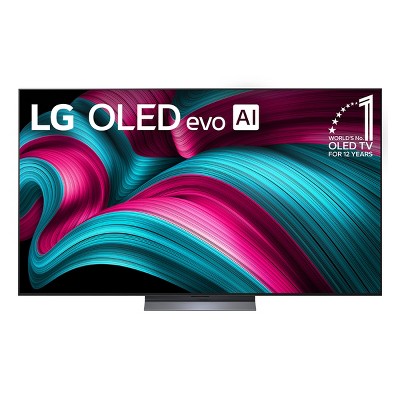
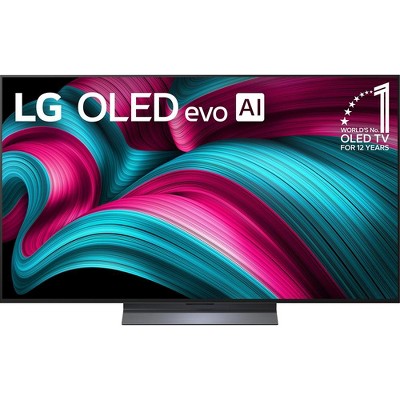
- Option 1: LG C5 65-inch OLED TV at Target
- Option 2: TCL Q7 55-inch QLED TV at Amazon
- Option 3: TCL QM6K 65-inch Mini-LED TV at Amazon
- Option 4: Hisense U8QG 65-inch Mini-LED TV at Amazon
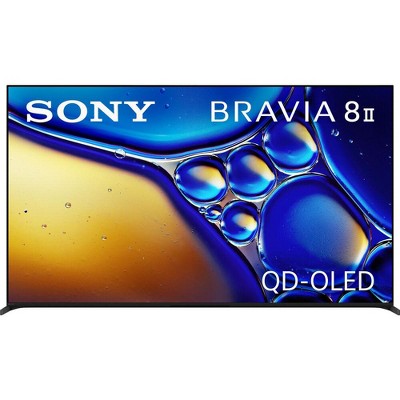
- Option 5: Sony BRAVIA 8 II 65-inch QD-OLED TV at Amazon
- Option 6: Panasonic Z95B 65-inch OLED TV at Amazon
- Option 7: Sony BRAVIA 8 II 65-inch QD-OLED TV at Target
- Option 8: LG C5 55-inch OLED TV at Target
- Start with the room, then choose the exact listing
The eight rows include retailer alternatives, not eight unique television models. Scores are editorial fit judgments for the uses described, not measured laboratory results. Duplicate models keep the same score because a different retailer does not improve picture quality.
Compare the setup before the specification headline
| Television | Retailer | Documented identity | Best role | Before choosing |
|---|---|---|---|---|
| LG C5 65-inch OLED TV | Target | OLED; Dolby Vision; four HDMI 2.1 inputs; webOS | Best Mixed-Use Room Pick | Match exact model and seller |
| TCL Q7 55-inch QLED TV | Amazon | 55-inch QLED; Google TV; native 120Hz; model 55Q750G | Best Smaller Mixed-Use Pick | Match exact model and seller |
| TCL QM6K 65-inch Mini-LED TV | Amazon | Mini-LED; Google TV; 144Hz; Dolby Vision and HDR10+ | Best Mini-LED All-Rounder | Match exact model and seller |
| Hisense U8QG 65-inch Mini-LED TV | Amazon | Mini-LED; Google TV; native 165Hz; Dolby Vision and HDR10+ | Best High-Refresh Mini-LED Pick | Match exact model and seller |
| Sony BRAVIA 8 II 65-inch QD-OLED TV | Amazon | QD-OLED; Google TV; XR processor; Dolby Vision | Best Movie-Focused Google TV Pick | Match exact model and seller |
| Panasonic Z95B 65-inch OLED TV | Amazon | Tandem OLED; Fire TV; Dolby Vision and HDR10+; 144Hz | Best Integrated Cinema Pick | Match exact model and seller |
| Sony BRAVIA 8 II 65-inch QD-OLED TV | Target | QD-OLED; Google TV; 2025 model; 65-inch screen | Best Sony Retailer Alternative | Match exact model and seller |
| LG C5 55-inch OLED TV | Target | OLED; native 120Hz; up to 144Hz gaming; Dolby Vision; webOS | Best Smaller OLED Alternative | Match exact model and seller |
Option 1: LG C5 65-inch OLED TV at Target
The LG C5 is the starting point for a room that has to do several jobs. It has OLED contrast for evening films, Dolby Vision support, and four HDMI 2.1 inputs for connected devices. This Target listing identifies the 65-inch OLED65C5PUA, so the model code matters more than the broad C-series name. The recommendation is about a versatile setup, not a claim that one retailer sells a different display. Read the LG C5 65-inch OLED TV product page for the exact listing.
Brand and picture: LG uses self-lit OLED pixels rather than a separate local-dimming backlight. Tom's Guide selected the C5 as its favorite television of 2025 and praised its mix of picture quality and gaming features. That review supports its place near the front of this shortlist. It does not mean we tested this set ourselves, and it does not guarantee that a bright window will disappear from the screen.
Pros: Dolby Vision, four high-bandwidth inputs and webOS give this model a clear role in a shared living room. A household can plan several connected devices without making the soundbar connection an afterthought. The Target description also distinguishes the fast PC gaming mode from ordinary viewing. Start with the content and devices you actually use rather than choosing by the largest refresh-rate label.
Cons: it is not LG's highest-end OLED, and independent coverage describes brighter alternatives above it. The Target page is a marketplace listing sold and shipped by WORLD WIDE STEREO, not a promise of direct Target fulfillment. Review the seller, included parts and service terms on the product page instead of assuming every listing follows the same purchase process.
Options and setup: this entry is the 65-inch television without the accessory bundles shown elsewhere on the site. Check the stand footprint against the cabinet and leave room for a soundbar before deciding where it belongs. If afternoon reflections dominate your room, compare the Mini-LED options below as well. If evening movies and several connected devices matter more, this is the most balanced first stop.

4K Ultra HD Resolution: Experience incredible detail with 4X the resolution of 1080p Full HDTVs. .Standby Power :<0.5 watts
QLED – Quantum Dot Technology with UltraWide Color Gamut: Enjoy over a bi...
Option 2: TCL Q7 55-inch QLED TV at Amazon
The TCL Q7 55Q750G is the smaller QLED alternative in this guide. The base Amazon source identifies a 55-inch 4K screen, Google TV and a 120Hz panel. It is a 2023 model retained in this buying shortlist, not a 2025 launch. It also is not a QM6K Mini-LED: similar TCL series names should not erase the difference between their documented backlight systems.
Brand and picture: TCL names a direct LED backlight and full-array local dimming for the Q7, alongside quantum-dot color. Those are the source features used for this recommendation. The guide does not turn the retailer's brightness or dimming-zone ceiling into a measurement of this exact size. A family-wide marketing figure can describe a limit without establishing identical performance across all models.
Pros: the 55-inch screen provides a smaller room-fit option alongside the larger televisions in this guide. Google TV and support for Dolby Vision IQ, HDR10+, HDR10 and HLG give it a clear feature identity. The documented 120Hz panel also makes the model relevant to investigate for a compatible gaming source. Those features explain a shortlist role, not a promise that every movie, app or input displays at the panel's maximum rate.
Cons: Game Accelerator wording reaches up to 240Hz, but this guide does not equate that with native 4K 240Hz operation. Confirm the resolution and source requirements of a gaming mode before choosing the television around that number. The article did not test motion, blooming, brightness or input lag. Manufacturer statements about blur-free or lag-free operation are not adopted as measured results.
Options and setup: use the base 55Q750G listing rather than a renewed unit or a seller accessory package. Measure the cabinet, stand position and seating distance before deciding that a larger screen is automatically better. Compare ordinary programming and a familiar dark scene as well as a bright demonstration. Choose the Q7 for a documented smaller QLED setup that meets the actual input needs, while keeping its 120Hz panel separate from gaming-accelerator marketing.
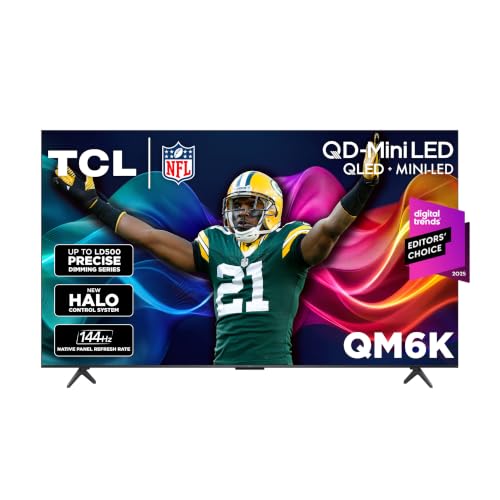
TCL QM6K QD-MINI LED TV SERIES - AFFORDABLE PREMIUM PERFORMANCE FOR SPORTS, GAMING & STREAMING. Experience superior contrast, rich color, and ultra-smooth motion with TCL’s QD-Mini LED technology. ...
Option 3: TCL QM6K 65-inch Mini-LED TV at Amazon
The TCL QM6K is the 65-inch Mini-LED counterpoint to the OLED models in this guide. TCL identifies Google TV, a native 144Hz refresh rate, Dolby Vision IQ and HDR10+ support. Those features make it worth comparing for daytime shows, sports and evening films. Read the TCL QM6K 65-inch Mini-LED TV product page for the exact listing.
Brand and picture: TCL's QM6K specifications describe a QD-Mini LED backlight with local dimming, rather than self-lit OLED pixels. This is a different series from the QM7K and QM8K. Reviews and brightness measurements for those models do not establish this model's performance. This guide did not perform television tests.
Pros: support for both prominent dynamic HDR formats makes this a flexible option for households with varied sources. Google TV is another clear point of difference from LG's webOS and Samsung's interface. The 144Hz capability can matter to a compatible gaming PC, while ordinary films and most television programming do not require that maximum mode. Match the connection settings to the source instead of leaving every input in the same configuration.
Cons: local-dimming televisions are not the same technology as OLED. Compare subtitles against dark scenes and bright objects near black backgrounds before deciding how much blooming matters to you. The maximum gaming refresh rate also depends on a compatible source and input mode; it is not a promise that every video runs at 144Hz.
Options and setup: the table uses the base 65-inch QM6K, not the QM8K or a newer similarly named model. Put it on your list if you prefer a Mini-LED display but still want serious gaming and HDR features. Check cabinet dimensions, seating position and the actual included stand separately. Its appeal is a broad feature set for a mixed-use room, not a claim that it wins every image-quality contest.
Quick reference for the three retailer entries above.
| Product | Key labels | Score | Award |
|---|---|---|---|
| LG C5 65-inch OLED TV | OLED; Dolby Vision; four HDMI 2.1 inputs; webOS | 9.0 | Best Mixed-Use Room Pick |
| TCL Q7 55-inch QLED TV | 55-inch QLED; Google TV; native 120Hz; model 55Q750G | 8.8 | Best Smaller Mixed-Use Pick |
| TCL QM6K 65-inch Mini-LED TV | Mini-LED; Google TV; 144Hz; Dolby Vision and HDR10+ | 8.8 | Best Mini-LED All-Rounder |

MINILED PRO WITH UP TO 5000 NITS PEAK BRIGHTNESS AND UP TO 5600 LOCAL DIMMING ZONES: See the realism of every shadow cast by the players and the ball. When your TV is backlit by thousands of tiny L...
Option 4: Hisense U8QG 65-inch Mini-LED TV at Amazon
The Hisense U8QG is another Mini-LED route, with a distinctly high-refresh gaming identity. The source listing names the 65U8QG, Google TV and a native 165Hz panel. That gives it a different specification profile from the 144Hz TCL entry, but a larger number is useful only when the connected device, resolution and game can use the corresponding mode. A console or film does not become faster because the panel supports a higher ceiling. Read the Hisense U8QG 65-inch Mini-LED TV product page for the exact listing.
Brand and picture: Hisense's U8 family combines a local-dimming Mini-LED backlight with quantum-dot color technology. The listing also names Dolby Vision and HDR10+ support. Those documented features are the basis of this option's role in the guide. Claims such as an enormous maximum brightness or zone count should not be treated as the performance of every size in every scene, so this article does not use them to assign a laboratory-style verdict.
Pros: the format support and high native refresh rate make this a useful candidate for someone dividing screen time between streaming and a capable gaming computer. Google TV keeps its smart interface in the same broad family as the TCL and Sony choices. That can simplify the comparison: first decide on picture technology and connections, then judge which device's menus and remote suit the household.
Cons: the retailer heading uses additional gaming-rate wording that should not be read as a promise of full-resolution performance at every stated rate. The page also varies its audio-power wording. Avoid choosing by those ambiguous figures without checking the manufacturer's size-specific documentation. A technical label is a reason to investigate, not a substitute for understanding the mode you intend to use.
Options and setup: this entry is the 65-inch U8QG base television, not a different U-series model. Center the main seat where possible and compare dark scenes with subtitles as well as bright sports footage. If your room is primarily an evening movie space, weigh the OLED choices too. Choose the U8QG when its Mini-LED approach and high-refresh PC potential match an actual use case, rather than an impressive number on a product heading.

HANDPICKED BY AMAZON: They did the research so you don’t have to.
PURE BLACK AND OUR HIGHEST OLED BRIGHTNESS: Over 8 million self-lit pixels are precisely controlled to produce pure black with our ...
Option 5: Sony BRAVIA 8 II 65-inch QD-OLED TV at Amazon
The Sony BRAVIA 8 II is the movie-focused Google TV choice in this lineup. The linked base listing identifies the K-65XR80M2 and a QD-OLED panel. That exact model code matters because the original BRAVIA 8 and other Sony XR televisions are not interchangeable products. This entry is aimed at someone who wants a self-lit display and Sony's processing approach without leaving the Google TV environment. Read the Sony BRAVIA 8 II 65-inch QD-OLED TV product page for the exact listing.
Brand and picture: Sony names its XR processor, quantum-dot color technology and studio-calibrated picture modes. The page also lists Dolby Vision and Dolby Atmos. Treat those as documented features rather than adopting every marketing superlative in the heading. A manufacturer's claim that a model is its brightest OLED does not establish that it is brighter than every competing television, and this article makes no such comparison.
Pros: Google TV, Apple AirPlay 2 and Google Cast are all named in the listing, giving households several ways to find and share content. The Sony Pictures CORE service is part of the television's entertainment story as well. The main attraction is the combination of an OLED picture, cinema-oriented features and a familiar interface, not the idea that processing can turn every compressed stream into a reference-quality film.
Cons: included movie offers and service access can have their own conditions, which should be read separately. This guide does not assign a cash value to movie credits or promise a lasting catalog. It also does not assume that Sony's PlayStation branding answers every connection question. A gaming household should still check its device requirements against the television's size-specific port and mode documentation.
Options and setup: select the base K-65XR80M2 rather than a television-plus-mount package when following this table link. For a cinema-first room, consider the actual evening light level, the position of the sofa and whether a sound system is already part of the plan. Use a familiar movie to compare processing choices rather than accepting the most exaggerated preset. This is the Sony option for deliberate film viewing, with no claim of first-hand testing by this guide.

Primary RGB Tandem with ThermalFlow: The new OLED panel with Aaerodynamic ThermaFlow Cooling System significantly Increases brightness and color gamut, delivering stunning brilliant visuals.
HCX Pr...
Option 6: Panasonic Z95B 65-inch OLED TV at Amazon
The Panasonic Z95B is the integrated-cinema option for someone who wants the television itself to carry more of the picture-and-sound experience. The linked 65Z95BP listing names a Primary RGB Tandem OLED panel, Fire TV, Dolby Vision IQ, HDR10+ Adaptive and a 144Hz gaming mode. Those features give it a different identity from the Google TV models here, especially for a household that already likes Fire TV. Read the Panasonic Z95B 65-inch OLED TV product page for the exact listing.
Brand and cinema: Panasonic pairs its OLED panel with an HCX Pro AI processor and a Technics-tuned 360 Soundscape Pro system. TechRadar's year-end review account selected the Z95B as its favorite flagship OLED among the models tested and singled out built-in sound as a strength. That is attributed independent coverage, not a claim that we performed the same comparison. The cited review's regional pricing is deliberately left out of this guide.
Pros: supporting both Dolby Vision and HDR10+ makes this a practical candidate for viewers with several HDR sources. Built-in audio deserves attention if you would otherwise postpone a soundbar purchase. The listing names upward- and side-firing speakers, while the independent account describes an engaging cinema presentation. That combination provides a reason to audition the television's sound, not a guarantee that it will replace every separate speaker system.
Cons: the Z95B has a different software environment from the Sony, Hisense and TCL televisions. Familiarity with Fire TV is helpful, but someone who dislikes that interface should not choose it solely for the panel. Hands-free voice control also means the household should review microphone and privacy settings during setup. More convenience is worthwhile only when the people using it are comfortable with the controls.
Options and setup: this table points to the base 65-inch television rather than an accessory bundle. Give its built-in audio a fair trial with dialogue-heavy material and a familiar film before deciding what additional sound equipment is needed. Keep the cabinet surface clear enough that objects do not obstruct speakers or the screen. Choose the Panasonic for a cinema-focused system with fewer separate parts, while still checking its connection needs against your own devices.
Quick reference for the three retailer entries above.
| Product | Key labels | Score | Award |
|---|---|---|---|
| Hisense U8QG 65-inch Mini-LED TV | Mini-LED; Google TV; native 165Hz; Dolby Vision and HDR10+ | 8.7 | Best High-Refresh Mini-LED Pick |
| Sony BRAVIA 8 II 65-inch QD-OLED TV | QD-OLED; Google TV; XR processor; Dolby Vision | 8.9 | Best Movie-Focused Google TV Pick |
| Panasonic Z95B 65-inch OLED TV | Tandem OLED; Fire TV; Dolby Vision and HDR10+; 144Hz | 9.0 | Best Integrated Cinema Pick |
Option 7: Sony BRAVIA 8 II 65-inch QD-OLED TV at Target
This Target listing is the retailer alternative for the Sony BRAVIA 8 II, not a separate tenth television technology. The product page identifies a 65-inch QD-OLED Google TV from the 2025 range. Keeping the duplicate model visible is useful because the shopping route and seller can differ even when the television is the same. A different storefront is not evidence of a different panel or better picture quality. Read the Sony BRAVIA 8 II 65-inch QD-OLED TV product page for the exact listing.
Brand and identity: Sony's BRAVIA 8 II belongs on a shortlist for a film-focused living room with Google TV preferences. The source page title is precise enough to distinguish it from the earlier BRAVIA 8. Follow the full name and model documentation when comparing accessories, wall mounts and input requirements. Broad terms such as BRAVIA, OLED or 4K are not enough to establish that two offers describe the exact same television.
Pros: this entry provides a clear alternative retailer path for the cinema-first Sony choice. It can help a shopper compare the purchase process without mixing in a refurbished listing or an accessory package. The core QD-OLED and Google TV identity remains the reason to consider the product. Convenience in buying, delivery planning and support is a separate part of the decision from measured image quality.
Cons: the page is sold and shipped by Beach Camera. Do not assume that a Target URL means the seller, delivery arrangements or service process are identical to an item sold directly by Target. Read the actual product-page terms before ordering. This guide does not make a delivery-time promise, repeat a temporary offer or assume that retailer policies are interchangeable for every large television.
Options and setup: compare this base television listing with the Sony Amazon entry if the model itself is already your preferred choice. Do not add a bundled mount merely because another page recommends one; check the television's mounting requirements and the wall separately. For a cabinet setup, verify that the stand and screen fit the available space. This option is best understood as a second route to the same movie-focused model, with the seller distinction kept clear rather than hidden behind a duplicate score.
Option 8: LG C5 55-inch OLED TV at Target
The LG C5 55-inch Target entry is the smaller OLED alternative to the 65-inch C5 at the start of the guide. The retrieved page provides the exact 55-inch identity, an observed product image, description and specifications. This is a size alternative within the same family, not a completely different television technology. Its purpose is to fit an OLED plan into a room that does not need the larger diagonal.
Brand and picture: the source describes self-lit OLED pixels, Dolby Vision, Dolby Atmos and webOS. Its structured specification identifies a native 120Hz screen, while the gaming description advertises operation up to 144Hz under the relevant conditions. Keep those statements separate. The guide did not measure brightness, reflections or motion, and does not translate the retailer's promotional language into an exact performance result for the 55-inch panel.
Pros: four HDMI inputs and the named gaming features make the model worth examining when several sources share the screen. NVIDIA G-Sync, AMD FreeSync Premium and VRR are documented on the page. A smaller size can be the useful feature when furniture, room layout or viewing preferences constrain a larger television. The choice should begin with that actual fit rather than assuming every household benefits from the biggest available OLED.
Cons: the page mixes processor-generation wording between its description and key features. This guide therefore leaves the processor generation out of the recommendation rather than silently selecting one field. Its bright-room claims also do not establish how the screen handles every window or lamp. An OLED buying decision should consider ordinary room use, including long sessions with static interface elements, rather than relying only on a short store demonstration.
Options and setup: follow the exact 55-inch C5 retailer entry and review the selected item and seller terms. This Target listing is supplied by a marketplace partner, not evidence that every C5 page has identical terms. Measure the stand and cable clearances before choosing it. Select this option when the smaller OLED and its documented connections suit the room, while treating it as a size alternative rather than a claim of better picture quality than the larger C5.
Start with the room, then choose the exact listing
Use the C5 as an OLED baseline, the QM6K and U8QG as the Mini-LED comparisons, and the Sony or Panasonic when cinema features lead the decision. Resolve any required input mode against the exact size and model before buying. A retailer alternative is worth comparing for the purchase process, but it is not a new television.
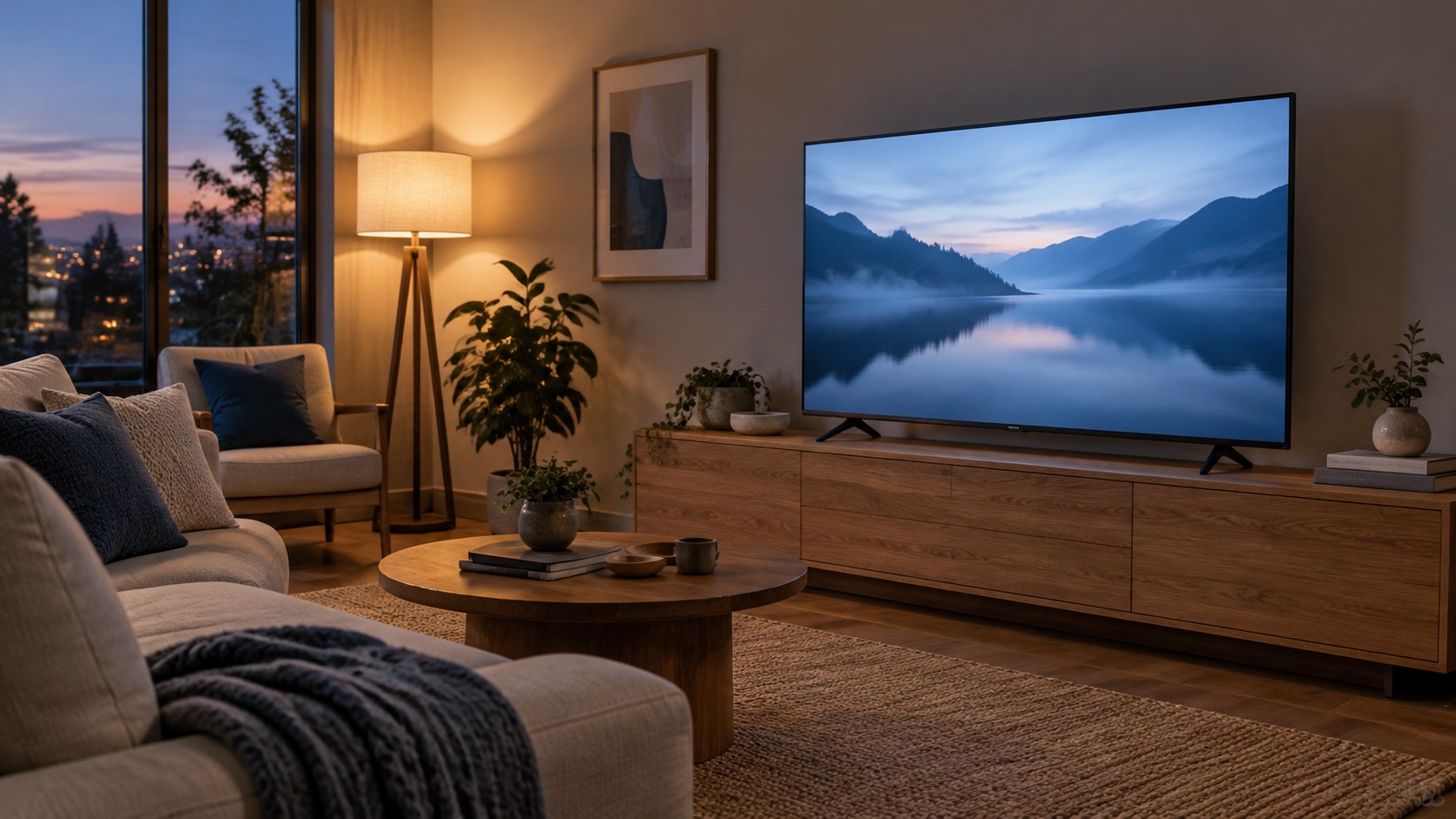
Image credit: two AI-generated generic living-room illustrations, not photographs of listed televisions. Product details: Amazon and Target listings; recommendation context: Tom's Guide, T3 and TechRadar year-end coverage. No television tests were performed for this guide. This post contains affiliate links; we may earn a commission on qualifying purchases at no extra cost to you.
The responses below are not provided, commissioned, reviewed, approved, or otherwise endorsed by any financial entity or advertiser. It is not the advertiser’s responsibility to ensure all posts and/or questions are answered.