

Last Updated on: Apr 09, 2026
A hose-end sprinkler is the simplest way to keep a lawn green and a garden healthy without installing an in-ground system. Set it up, turn on the water, and let it cover the yard while you do something else. The trick is choosing a sprinkler that fits the size and shape of your lawn and using it in a way that does not waste water.
What We'll Cover
- Top Lawn Sprinklers
- Types of sprinklers
- Matching a sprinkler to your yard
- Features worth having
- Oscillating sprinklers
- Impact, spike, and stationary sprinklers
- How much and when to water
- Smarter watering tools
- Watering new seed and sod
- Hoses, timers, and water pressure
- Care and storage
- Common mistakes
- Questions to ask before you buy
- The short answer
This guide covers the main types of sprinklers, how to match one to your yard, and how to water wisely, with picks from several stores.
Top Lawn Sprinklers
Types of sprinklers
- Oscillating: A bar with a row of nozzles rocks back and forth to water a rectangle. Great for square and rectangular lawns, and most let you adjust the width and range.
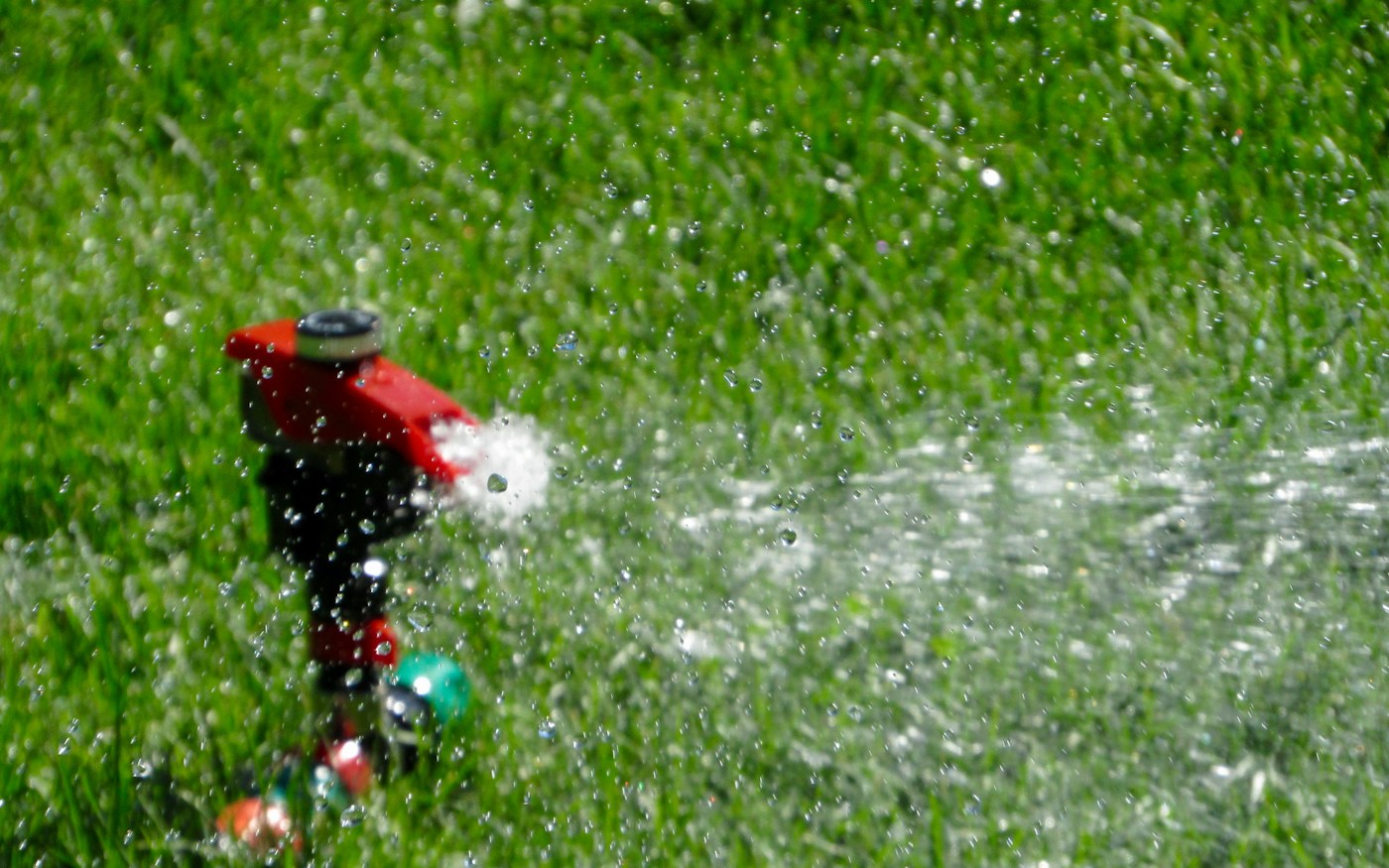
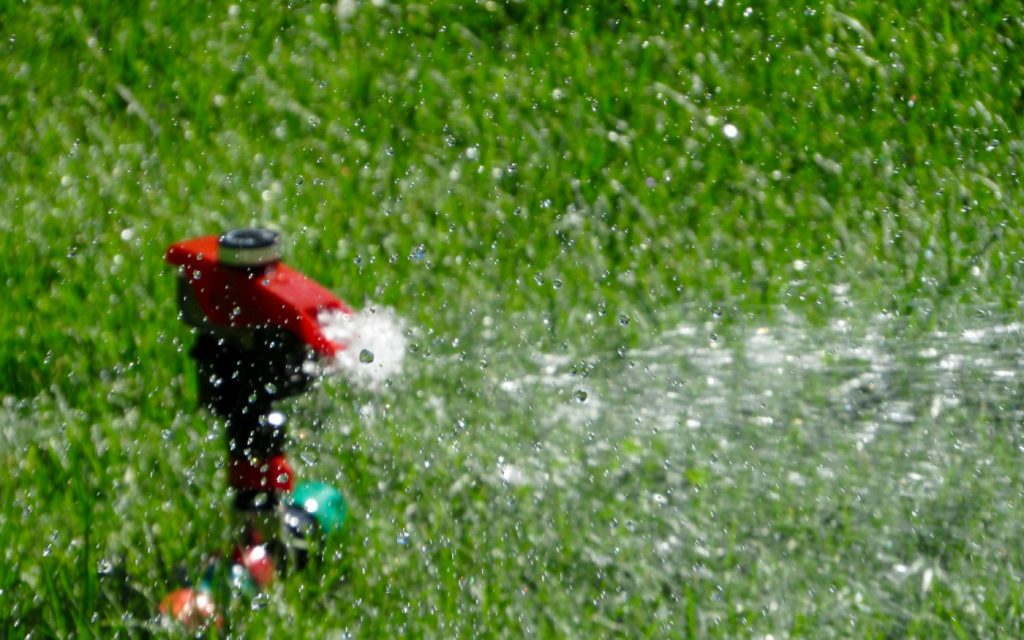
- Impact (pulsating): A single jet rotates in steps with a familiar ticking sound. It throws water far and can water full circles or partial arcs, good for large, open areas.
- Rotary or turbine: Spinning arms or a gear drive send out streams in a circle. Many are gentle and quiet.
- Stationary: No moving parts. They spray a fixed pattern, such as a circle or square, and suit small lawns and garden beds.
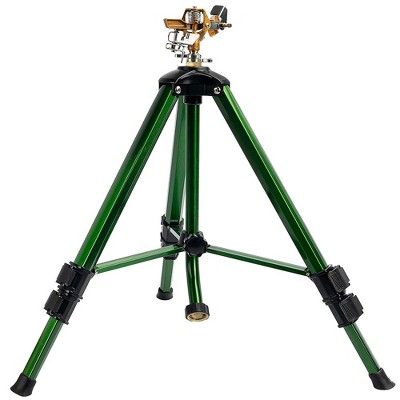
- Tripod: A sprinkler head raised on a tall stand to spray over tall plants and shrubs.
Matching a sprinkler to your yard
Start with the shape and size of the area. Rectangular lawns are easiest to water with an oscillating sprinkler, since its pattern matches the space. Round or irregular areas and large open lawns suit impact and rotary sprinklers, which cover circles or wedges. Small patches and narrow side yards are often best served by a small stationary sprinkler that will not soak the fence or sidewalk.
Coverage numbers on the box, listed in square feet, assume ideal water pressure. Your home's pressure and hose length can reduce the real coverage, so a sprinkler rated for a little more than your lawn size gives some breathing room.
Features worth having
- Adjustable range and width: Keeps water on the lawn and off the driveway.
- Flow control: Lets you slow the water on slopes or clay soil.
- Weighted or metal base: Keeps the sprinkler from tipping or creeping.
- Spike base: Holds the sprinkler steady in soft ground.
- Filters: A small screen helps keep nozzles from clogging.
- Quick connectors: Make it easy to move the sprinkler around the yard.
Oscillating sprinklers
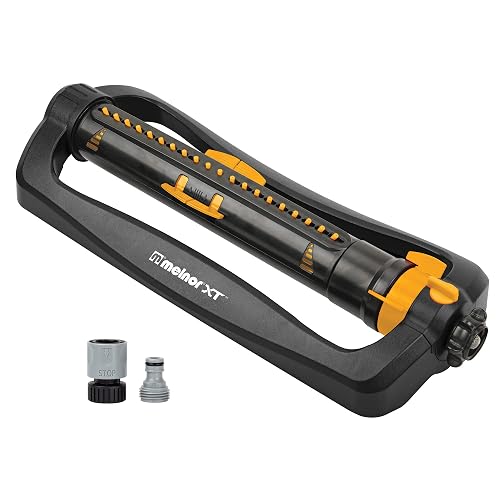
20 precision nozzles provide maximum coverage up to 4,500 sq. ft. for healthy grass and growing gardens
Watering Width Indicators visualize width adjustments to help you easily set and remember you...
The Melnor XT oscillating sprinkler covers up to 4,500 square feet with adjustable flow, width, and range.
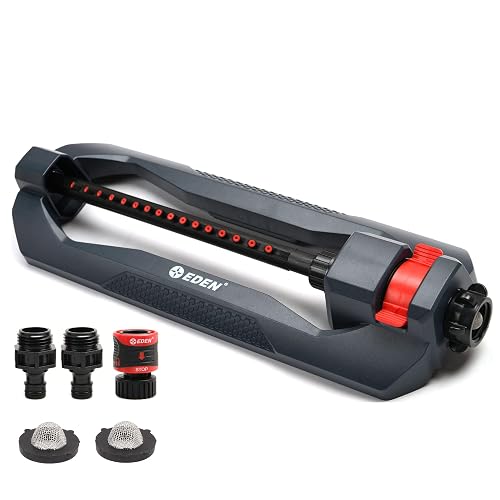
16 PRECISION NOZZLES- Provides even, consistent watering coverage for lawns and gardens up to 3,600 sq. ft..
ADJUSTABLE WATERING RANGE- Range sliding tabs allow easy customization of the watering a...
The Eden 96213 oscillating sprinkler has a weighted base, 16 nozzles, and stainless steel filters, with coverage up to 3,600 square feet.
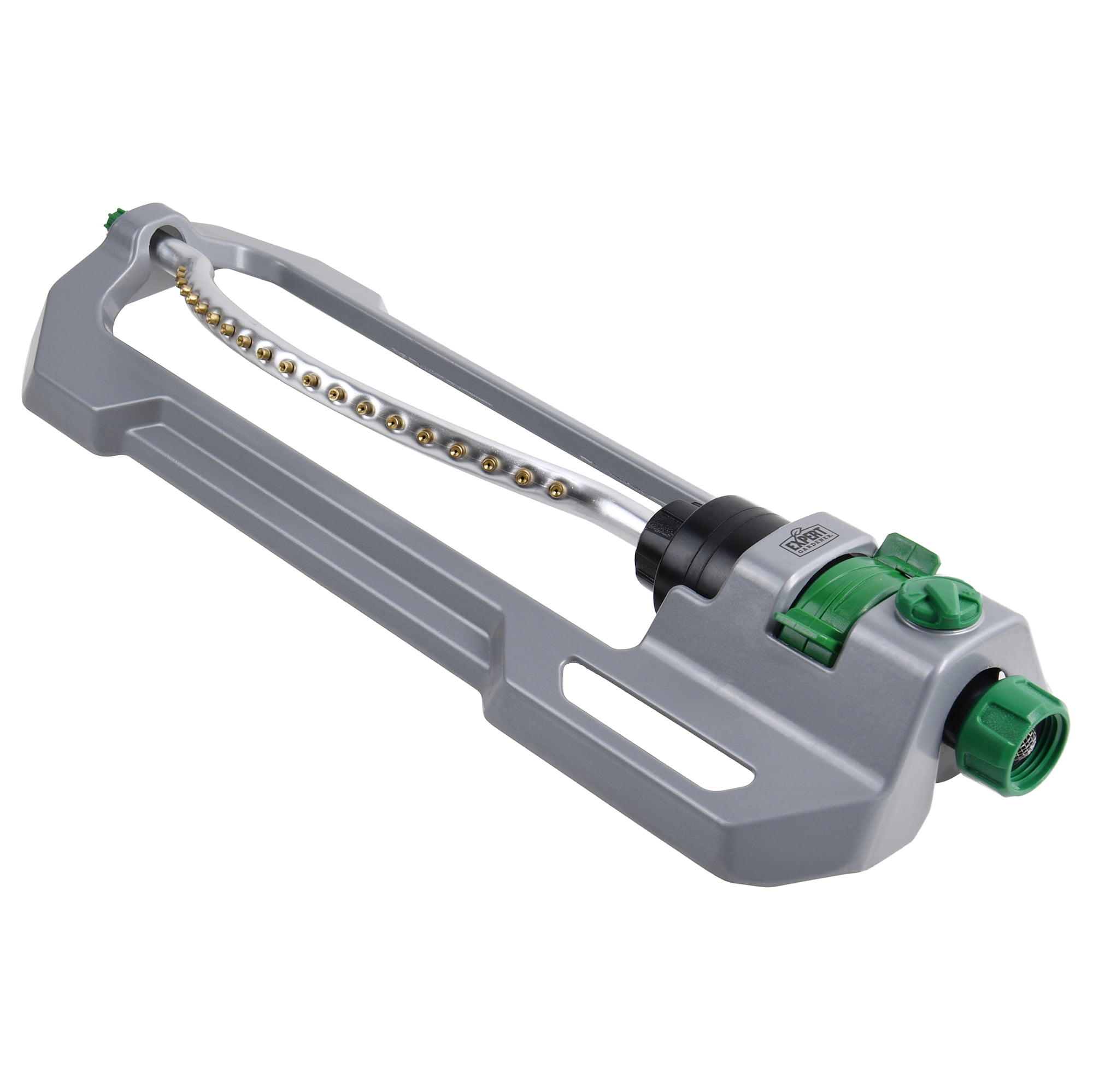
At Walmart, the Expert Gardener 4000 square foot oscillating sprinkler is a simple, low-cost option for medium lawns.
Impact, spike, and stationary sprinklers
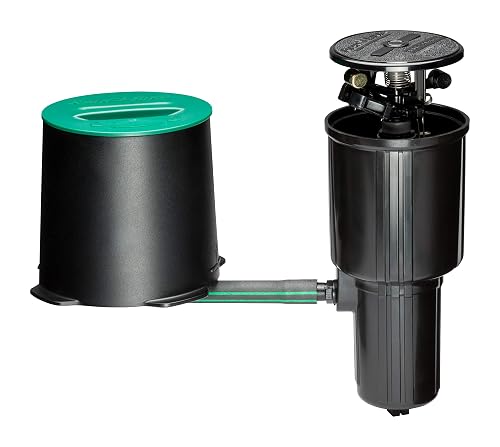
Eliminates hassle of sprinkler set-up and removal each time you water
Installs in a single small hole without any trenching in your yard
Works with your garden hose via a quick-connect fitting
Pops...
The Rain Bird LG3HE is an impact sprinkler with a Click-N-Go connection, good for watering full or partial circles.
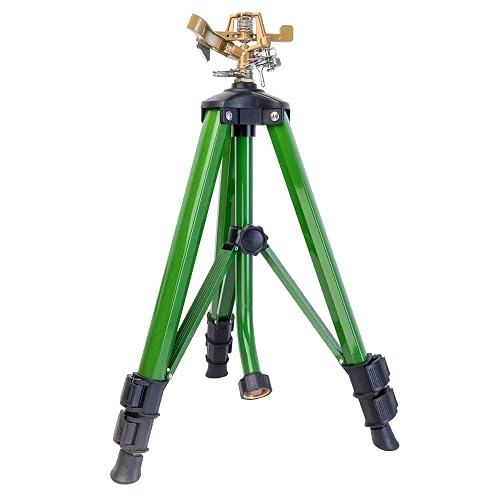
Wide Area Lawn Coverage: The Orbit Tripod Lawn Zinc Impact Sprinkler delivers powerful irrigation with a full 360-degree water distributor to help maintain healthy lawns
Long Range Irrigation: Buil...
The Orbit tripod zinc impact sprinkler raises the head on an adjustable stand to spray over taller plants and garden beds.
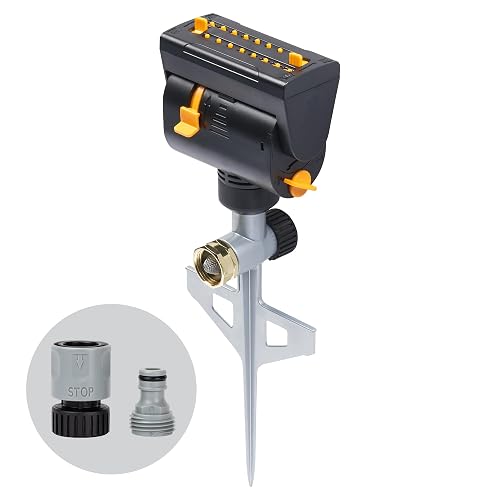
FULL-SIZE COVERAGE– Get the power of a full-sized oscillating sprinkler in a space-compact form—covering up to 4,000 sq. ft. to easily water large lawns, gardens, and newly seeded areas.
PRECISION ...
The Melnor MiniMax spike sprinkler pushes into the ground and covers up to 4,000 square feet in a full circle.
At Target, the Dazzle Bright impact sprinkler pairs a brass head with a tripod base for large areas.
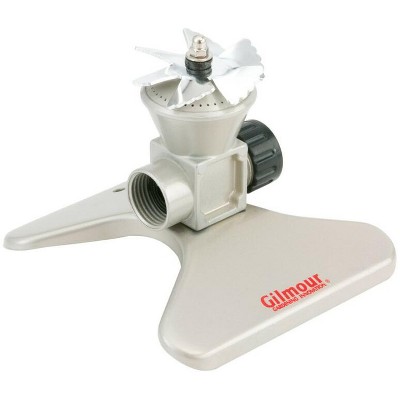
Also at Target, the Gilmour sprinkler sits on a metal elevated base and covers up to 1,024 square feet, a nice fit for small lawns and beds.
How much and when to water
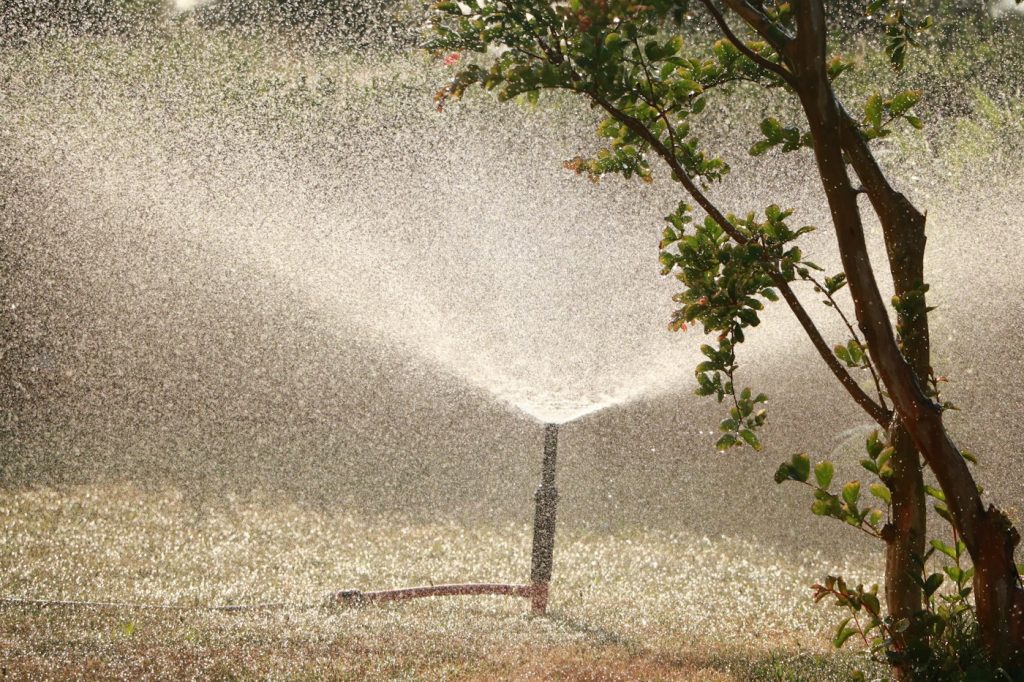
The EPA's WaterSense program advises avoiding watering in the middle of the day, when the hot sun evaporates much of the water before it reaches the roots. It also notes that a landscape typically needs about one inch of water a week, including rainfall, though that varies with where you live, the weather, and your plants. Your local water utility or Cooperative Extension Service can give advice for your area.
WaterSense suggests a simple test: place a few empty tuna cans around the lawn while watering and time how long it takes the sprinkler to fill them with half an inch of water. Then try watering for that amount of time twice a week, watch how the lawn responds, and adjust for the weather.
- Watch for pooling: WaterSense says to turn off the sprinkler if water starts to pool, to prevent overwatering, weeds, disease, fungus, and runoff.
- Do not water too often: Watering too frequently can drown plants or lead to shallow roots.
- Cycle and soak: On slopes or clay soil, split watering into shorter runs with breaks so water can soak in.
- Check local rules: Many towns set watering days or limits, especially in summer and during drought.
Smarter watering tools
If you want to go beyond a simple timer, WaterSense points to smarter controls. WaterSense labeled irrigation controllers come in two types: weather-based controllers, which adjust watering to local weather, and soil moisture-based controllers, which measure the moisture in the soil and water only when plants need it. These are most common with in-ground systems, but some hose-end timers now offer app control and rain delays too.
WaterSense also suggests saving rainwater with rain barrels or cisterns to supplement watering, while noting that some states have laws that limit rainwater collection, so check local rules first. A barrel under a downspout can supply a garden bed or potted plants between storms.
Watering new seed and sod
New grass seed and fresh sod need different care than an established lawn. Seed needs the top layer of soil kept evenly moist until it sprouts, which often means short, light watering once or twice a day. A gentle stationary or oscillating sprinkler with low flow helps avoid washing seed away. Once the grass is up and growing, slowly shift to longer, less frequent watering to push roots deeper. Follow the instructions on the seed bag or from your sod supplier.
Hoses, timers, and water pressure
A sprinkler is only as good as the water reaching it. Long, narrow hoses lower pressure, which shrinks coverage. A 5/8-inch hose is a good middle ground for most homes. A hose-end timer shuts off the water automatically, so you never forget and leave the sprinkler running all afternoon. If you connect several sprinklers in a row, each one will get less pressure, so test the setup before relying on it.
Care and storage
Rinse sprinklers and check the nozzles and filter screen for dirt or mineral buildup a few times a season. A pin or small brush clears most clogs. Before the first frost, drain the sprinkler and hose and store them indoors, since water left inside can freeze and crack parts. Keep plastic sprinklers out of direct sun when not in use to help them last longer.
Common mistakes
The most common mistake is watering at midday, when much of the water evaporates. Another is setting the sprinkler to spray the sidewalk or street, which wastes water and money. Many people also water a little every day, which encourages shallow roots; deeper, less frequent watering is usually better. Finally, placing a sprinkler without checking coverage can leave dry spots and soggy patches.
Questions to ask before you buy
- What shape is your lawn? Rectangles suit oscillating; circles suit impact and rotary.
- How big is the area? Check the square foot rating with room to spare.
- Do you have tall plants? A tripod sprinkler sprays over them.
- Is the ground soft or hard? Choose a spike or weighted base to match.
The short answer
For most rectangular lawns, an adjustable oscillating sprinkler is the easiest choice. Pick an impact or rotary sprinkler for large or round areas and a stationary one for small patches. Water early in the day, aim for about an inch a week including rain, and add a hose timer so nothing runs longer than it should.
The responses below are not provided, commissioned, reviewed, approved, or otherwise endorsed by any financial entity or advertiser. It is not the advertiser’s responsibility to ensure all posts and/or questions are answered.


The tuna can test is a clever idea. For a sloped front yard where water tends to run down to the sidewalk, would an impact sprinkler with lower flow work, or is cycle and soak the better fix?