

Last Updated on: Apr 08, 2026
A musty smell in the basement, fogged windows in the morning, towels that never quite dry: these are all signs that the air in your home is holding too much moisture. A dehumidifier pulls that water out of the air and collects it in a tank or sends it down a drain. It is one of the simplest ways to make a damp room feel fresher and more comfortable.
What We'll Cover
- Top Dehumidifiers
- What humidity level to aim for
- Understanding pint ratings
- Choosing the right size
- Features that matter
- Compressor vs. mini dehumidifiers
- Large-capacity picks for basements
- Mid-size picks
- Small-room and mini picks
- Where to put a dehumidifier
- Care and maintenance
- Other ways to lower humidity
- The short answer
Picking one is less about brand and more about matching the machine to the room. This guide covers what humidity level to aim for, how capacity ratings work (and why they changed in 2019), which features matter, and how to keep a dehumidifier running well, using guidance from the EPA and ENERGY STAR.
Top Dehumidifiers
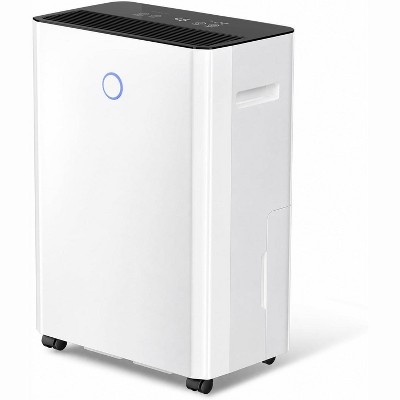
What humidity level to aim for
The EPA recommends keeping indoor humidity below 60 percent, and ideally between 30 and 50 percent relative humidity. Keeping moisture in that range is one of the main ways the agency suggests to limit mold growth indoors. You can check the level with a small humidity meter, often called a hygrometer, which the EPA notes is inexpensive and sold at many hardware stores. Many dehumidifiers also have a built-in humidity reading, though a separate meter placed across the room gives a better picture of the whole space.
Signs that a room is too humid include condensation on windows, walls, or pipes, a musty smell, damp spots, and peeling paint. The EPA advises acting quickly when you see condensation, drying the wet surface and dealing with the moisture source. A dehumidifier helps with humidity in the air, but it will not fix a leaking pipe or water coming in through a foundation, so repair those first.
Understanding pint ratings
Dehumidifiers are rated by how many pints of water they can remove in 24 hours at set test conditions. According to ENERGY STAR, the Department of Energy changed the test in 2019 to use cooler, more realistic conditions, similar to a basement. As a result, newer models often show lower pint numbers than older ones that remove a similar amount of water.
ENERGY STAR gives a rough guide: a portable unit rated 50 pints under the old test is about 30 pints under the new one, and an old 70-pint unit is roughly 40 to 45 pints. This is why some listings show two numbers, such as a larger figure alongside a smaller DOE figure. When you compare machines, make sure you are comparing the same kind of rating. If you are replacing an older dehumidifier, a new model with a smaller number may do the same job.
Choosing the right size
- Closets, bathrooms, small bedrooms: Mini dehumidifiers with small tanks are quiet and compact, but they remove only a small amount of water. They suit tight spaces with mild dampness.
- Bedrooms and living areas: Small compressor units with tanks around 85 to 100 ounces cover a single room.
- Larger rooms and moderately damp basements: Mid-size units in the 20 to 35 pint range (new DOE rating) handle more space and more moisture.
- Wet basements and large open areas: Large units rated around 50 pints on the listing, with a drain hose option, are the best fit.
If a room smells musty or has visible damp spots, size up. A larger unit running on a lower setting is usually quieter and works less hard than a small one that runs nonstop.
Features that matter
- Adjustable humidistat: Lets you set a target level so the machine turns itself on and off.
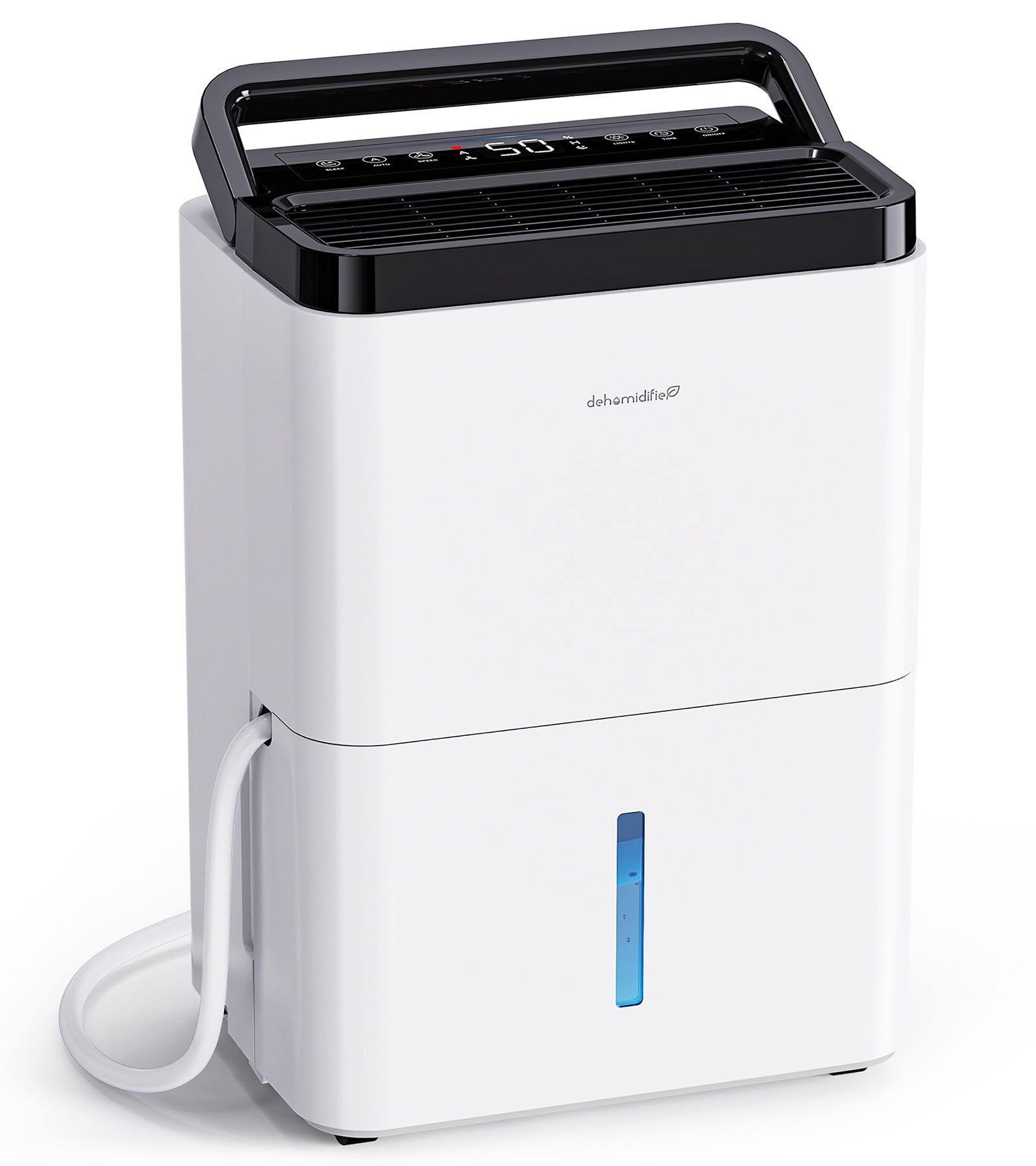
- Continuous drain: A hose connection lets water drain to a floor drain or sink so you never empty a tank.
- Auto shutoff: Stops the unit when the tank is full to prevent overflow.
- Auto defrost: Helps compressor models keep working in cool rooms like basements, where coils can frost up.
- Washable filter: Keeps dust off the coils.
- Timer and sleep mode: Useful in bedrooms.
- ENERGY STAR: Certified models are more efficient, which matters for a machine that can run for hours every day.
Compressor vs. mini dehumidifiers
Most full-size dehumidifiers use a compressor and cold coils, much like a small air conditioner. Air passes over the cold coils, moisture condenses into water, and the water drips into the tank. These units remove the most water.
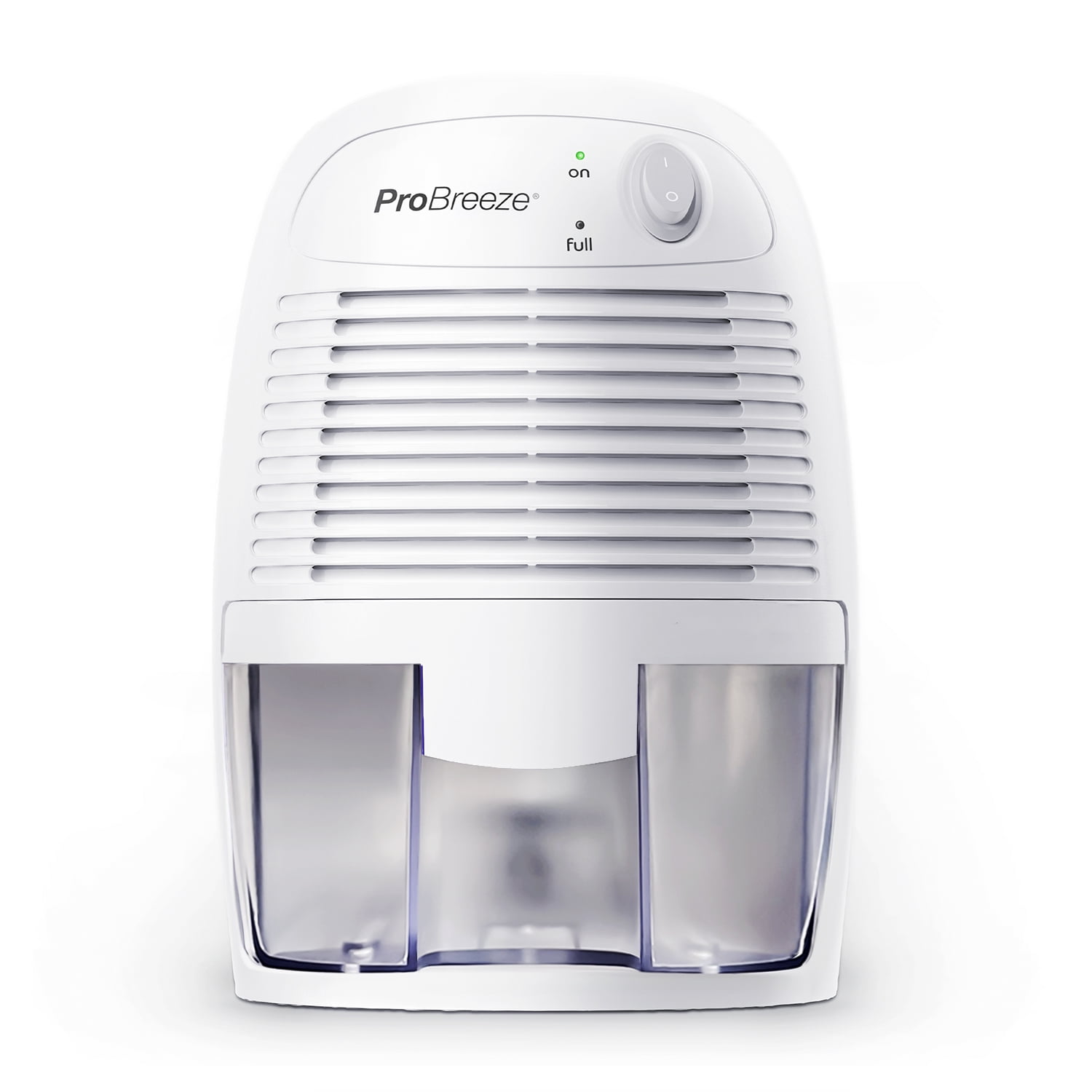
Many mini dehumidifiers use a Peltier, or thermoelectric, design. They are small, light, and very quiet, but they pull out far less water. They are a good match for a closet, a small bathroom, or an RV, not for a damp basement.
Large-capacity picks for basements
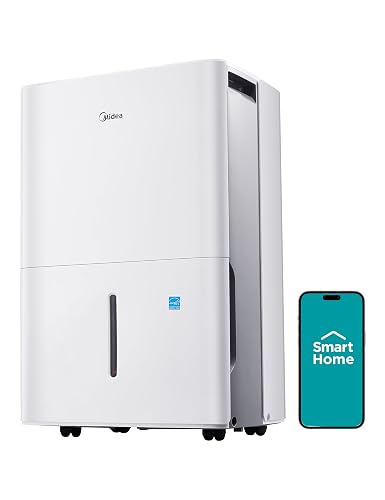
4,500 SQ. FT. DEHUMIDIFIER – Removes up to 50 pints of moisture per day with an adjustable humidity setting from 35% to 85%. Perfect for use in basement, bathroom, bedroom, office, kitchen, cellar,...
The Midea 50-pint model is ENERGY STAR certified and rated for spaces up to 4,500 square feet, making it a strong match for a large basement.
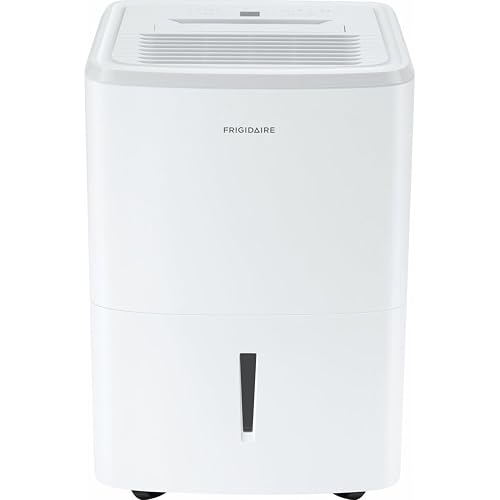
EASY TO CLEAN WASHABLE FILTER: Capture dust from the air and keep your dehumidifier working efficiently with our easy-to-clean washable filter.
CUSTOM HUMIDITY CONTROL: Maximize your comfort with c...
The Frigidaire 50-pint dehumidifier adds Wi-Fi, so you can check humidity and change settings from your phone.
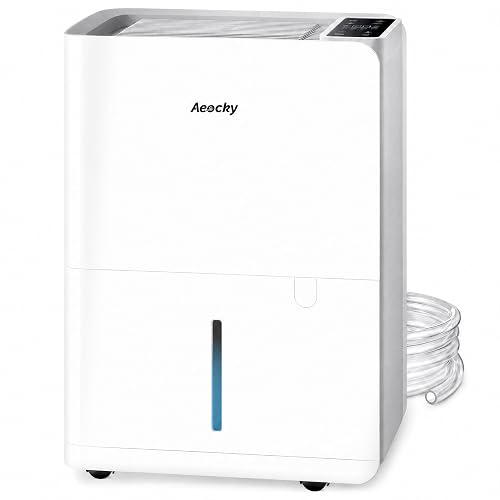
[The Undisputed Champion — Industry-Leading Dehumidifier Brand] When you choose AEOCKY, you get double market validation. According to data independently verified by Stackline, a leading third-part...
The AEOCKY 50-pint unit comes with a drain hose for continuous draining and is rated for up to 3,500 square feet.
Mid-size picks
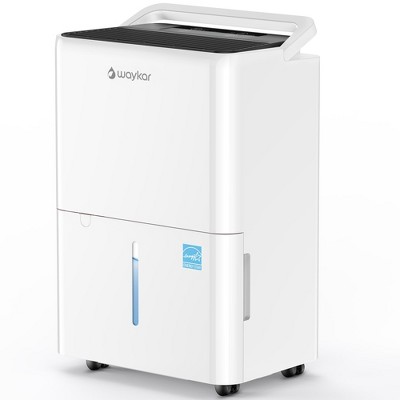
At Target, the Waykar 30-pint model is ENERGY STAR certified and rated for spaces up to 2,000 square feet.
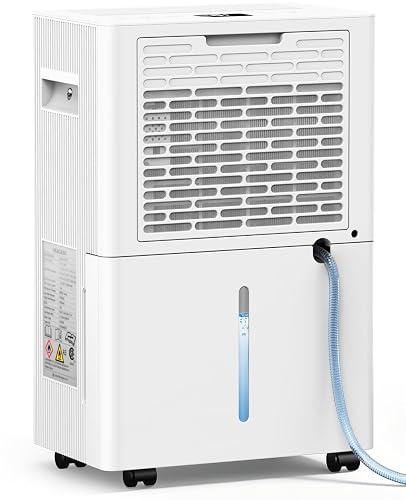
Quiet 38dB Sleep Mode & Screen Dimming: Designed for undisturbed sleep, this bedroom dehumidifier operates at a quiet 38dB—softer than a library reading room. Sleep Mode automatically locks the fan...
The VEAGASO 28-pint dehumidifier is rated for up to 2,000 square feet with a low listed noise level of 38 dB.
The ALROCKET 30-pint unit at Walmart lists both its old-style and DOE capacity ratings and includes a drain hose and auto defrost.
Small-room and mini picks
The COWSAR ultra slim dehumidifier removes up to 8 pints per day and has a humidity display and 24-hour timer. Its narrow body fits beside a bed or in a closet.
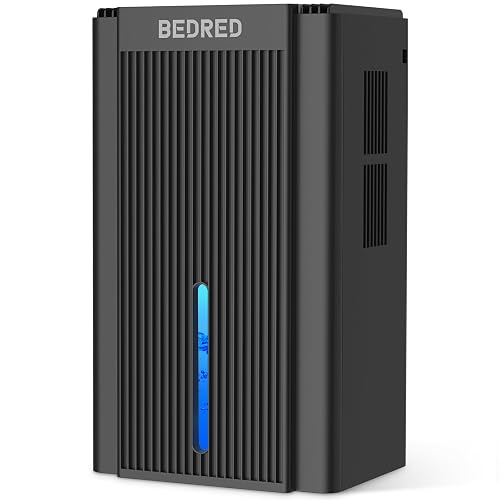
Semiconductor dehumidifiers use thermoelectric cooling to remove moisture from the air. They create a drier, more comfortable environment by reducing humidity and improving air quality.
Our home de...
The BEDRED dehumidifier has a 95-ounce tank and is sized for rooms up to 1,000 square feet.
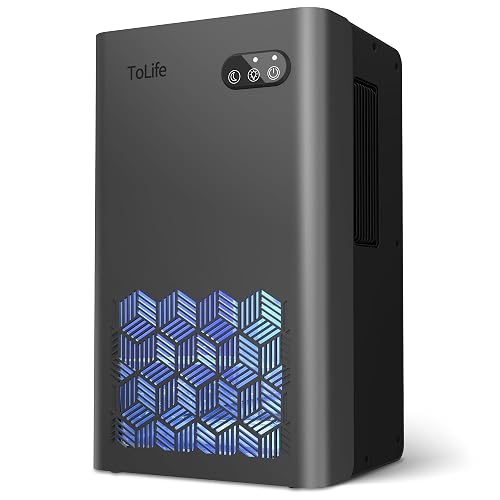
Upgrade High Efficient Dehumidification: Dehumidifier utilize semi conductor condensation technology, ensuring quiet operation while effectively extracting moisture from the air. This advanced feat...
The ToLife dehumidifier pairs a 95-ounce tank with a sleep mode and auto shutoff, a good fit for bedrooms.
The Pro Breeze mini is a compact Peltier unit with a 17-ounce tank, sized for about 215 square feet. It suits closets and small bathrooms.
Where to put a dehumidifier
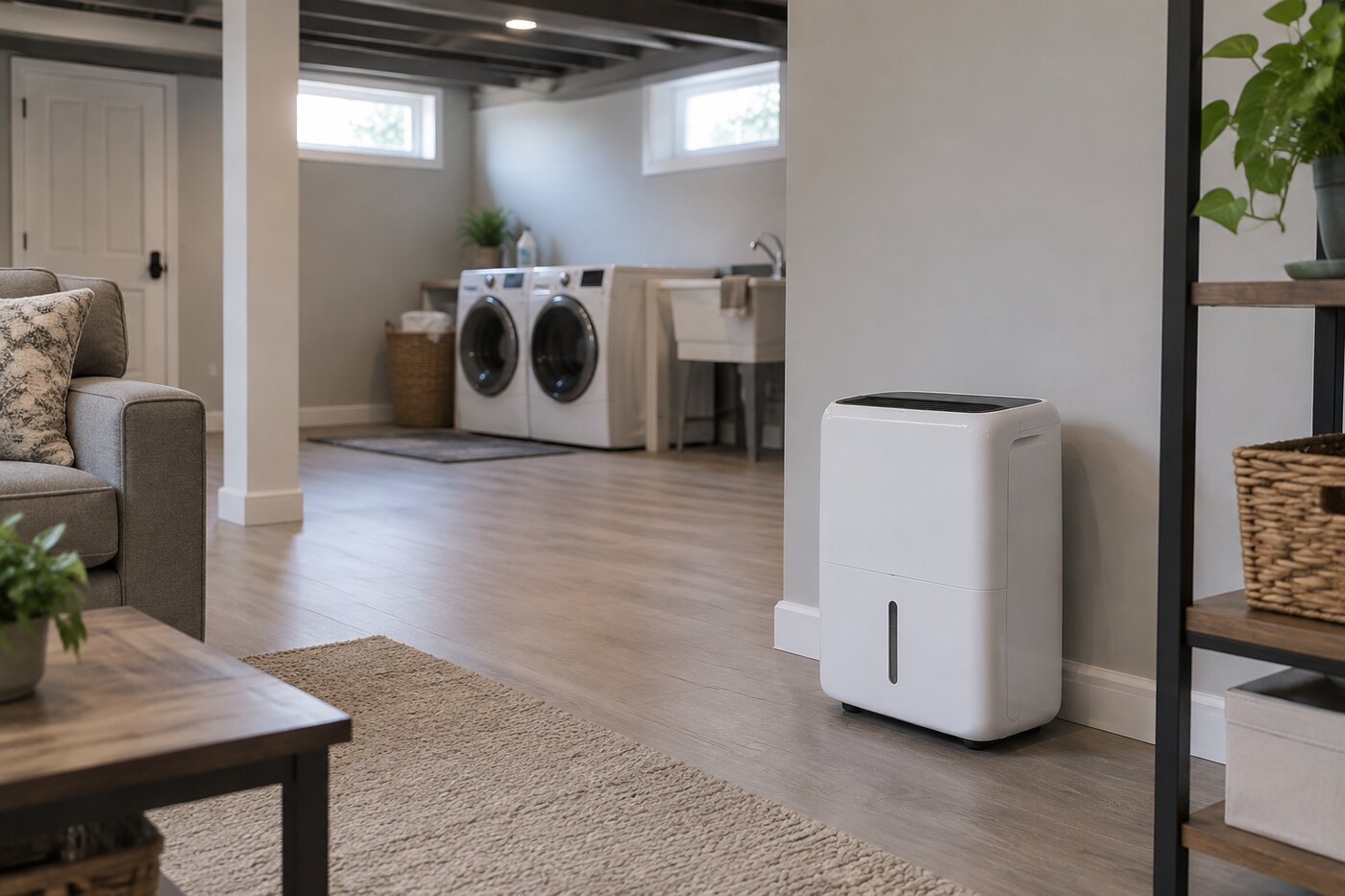
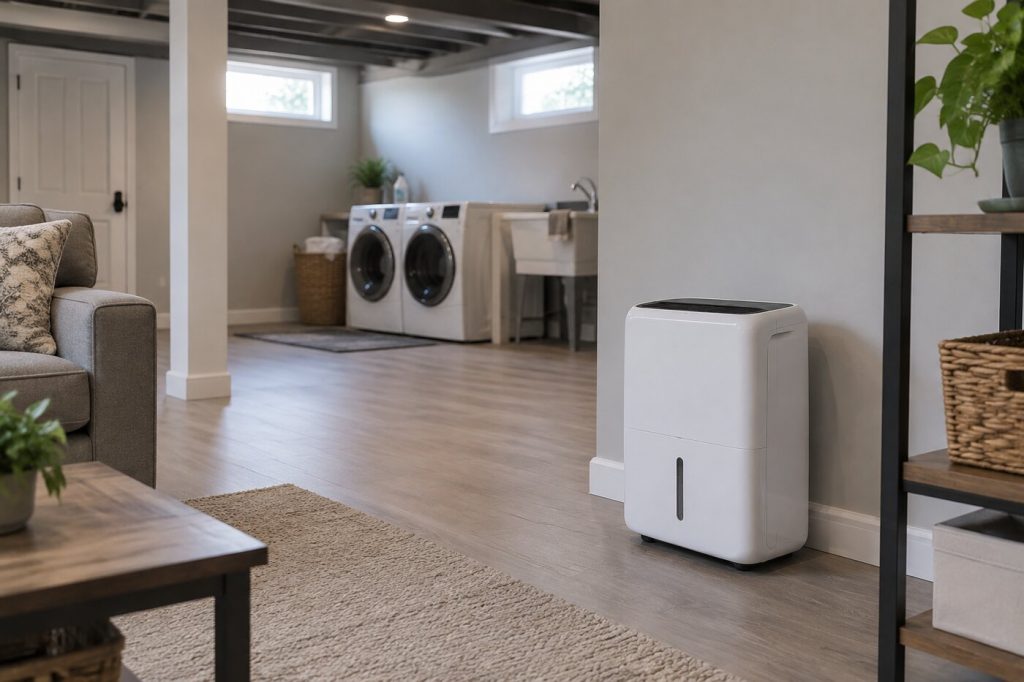
Place the unit in the dampest area, away from walls and furniture so air can flow freely around it. Most models need several inches of clearance on each side. Close windows and doors while it runs so it is not trying to dry the outdoors. In a basement, setting it near the laundry area or a sump pit can help, since those spots tend to be the wettest. If you use a drain hose, make sure it runs downhill to the drain the whole way.
Care and maintenance
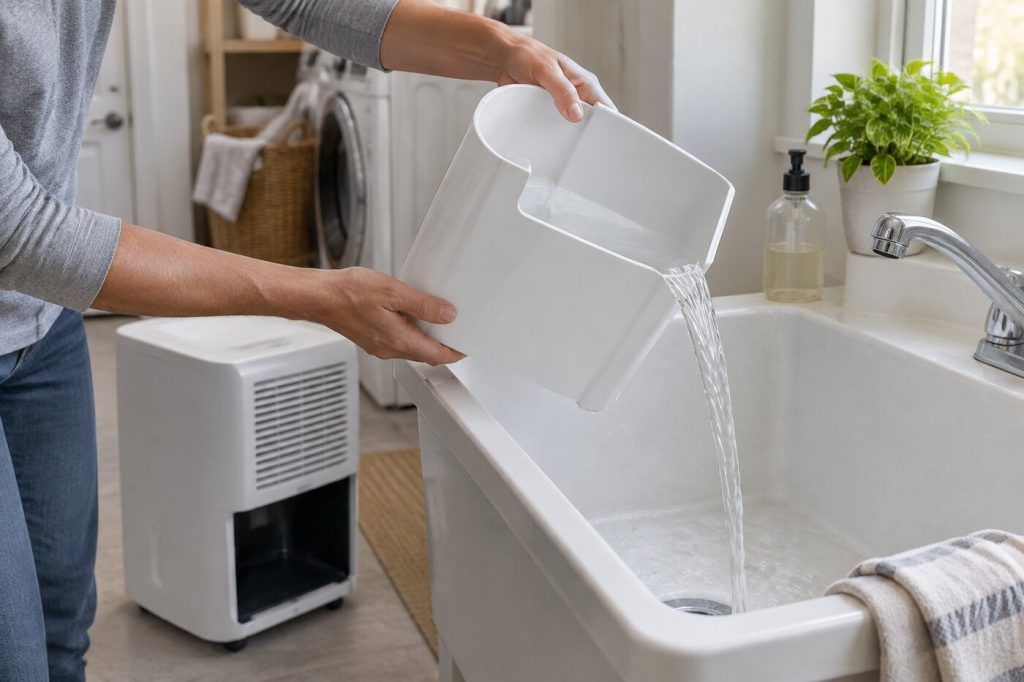
Empty the tank often if you are not using a hose, and rinse it every week or two to prevent slime and odors. Clean or rinse the filter according to the manual, usually every few weeks during heavy use. Dust on the coils makes the machine work harder, so vacuum the grille now and then. Unplug the unit before cleaning.
If the machine runs but collects little water, check the room temperature. Compressor units lose efficiency in cool rooms, and coils may frost over. Auto defrost helps, but a very cold space may call for a unit rated for low temperatures.
Other ways to lower humidity
A dehumidifier works best alongside a few simple habits. The EPA recommends venting moisture-producing appliances, such as clothes dryers and stoves, to the outside where possible. Use exhaust fans while showering and cooking, and let them run a little after. Fix leaks quickly, keep gutters clear, and make sure the ground slopes away from your foundation.
The short answer
Aim for indoor humidity between 30 and 50 percent, as the EPA suggests, and check it with a humidity meter. For a damp basement, choose a large unit with a drain hose. For a single room, a mid-size or small compressor model works well, and a mini unit is best kept for closets and bathrooms. When comparing models, remember that DOE ratings changed in 2019, so newer machines may show smaller pint numbers for similar performance.
The responses below are not provided, commissioned, reviewed, approved, or otherwise endorsed by any financial entity or advertiser. It is not the advertiser’s responsibility to ensure all posts and/or questions are answered.



Tip for anyone using the drain hose in a basement: check that the hose never loops up higher than the outlet on the unit. Water only drains by gravity on most models, so even a small rise can make it back up into the machine.